WHY SIX
Hexagons all the way down
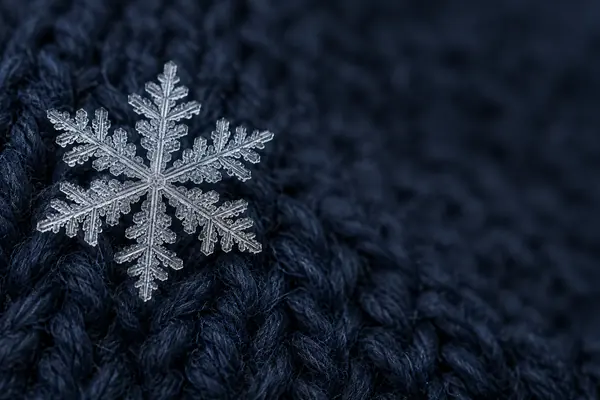
In a snow crystal the water molecules sit in a precise hexagonal array. Crystals start as tiny six-sided prisms, and arms sprout from the six corners.
How it grows kaleidoscopedoodle
WHAT THE PHYSICS SAYS
A snow crystal repeats one pattern six times.
Check a cloud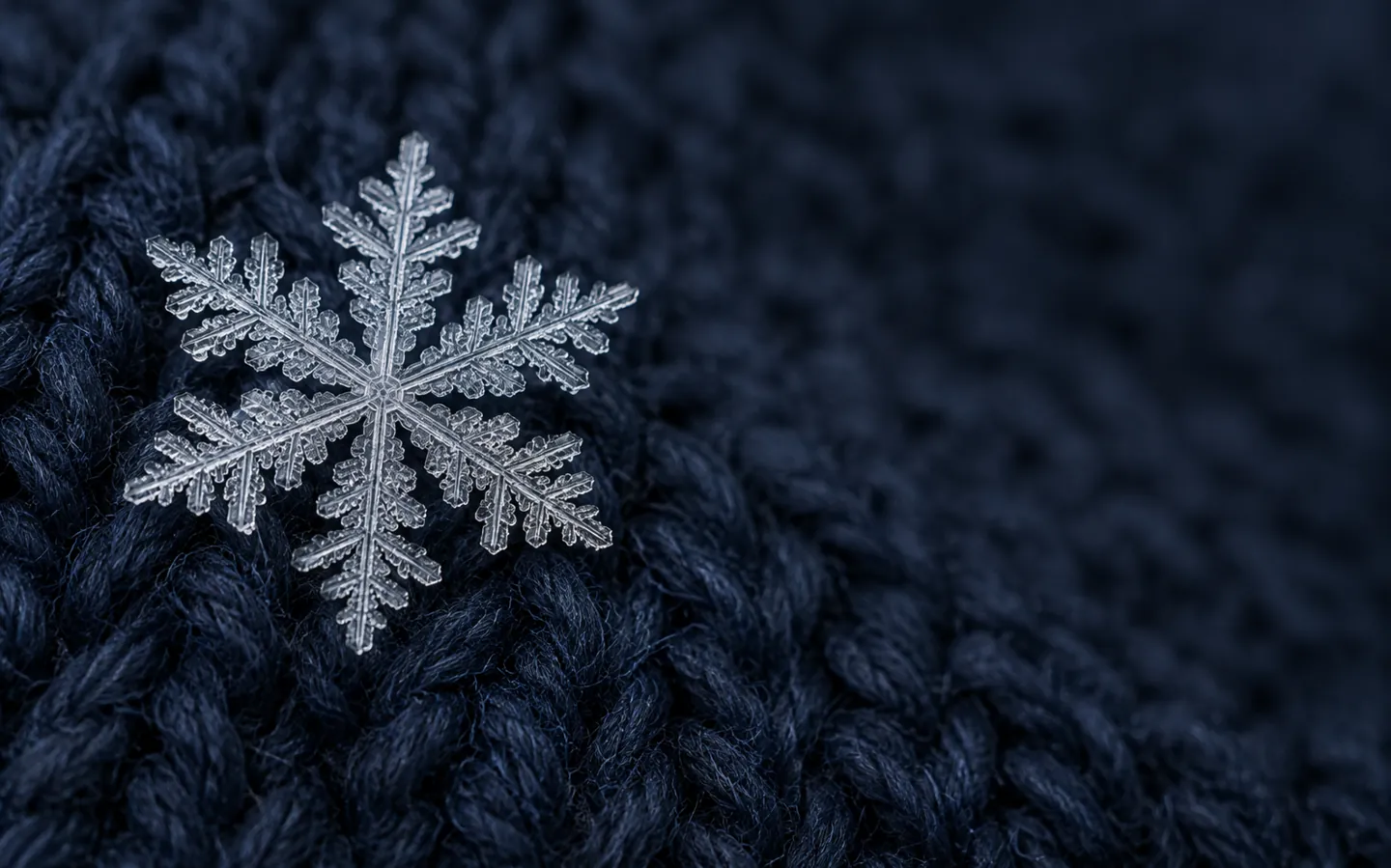
SIX ARMSone journey
No blueprint tells it to. The six-fold shape comes from how water molecules line up in ice, and the matching arms come from a shared journey through the cloud, where every change in temperature and humidity reaches all six arms at once.
Updated
THE SHORT ANSWER
Two separate questions with two answers:
why six, and why the arms match.
WHY SIX
In a snow crystal the water molecules sit in a precise hexagonal array. Crystals start as tiny six-sided prisms, and arms sprout from the six corners.
How it growsWHY THEY MATCH
The arms do not communicate. They match because all six took the same path and met the same changes at the same times.
Check a cloudPAPER SNOWFLAKES
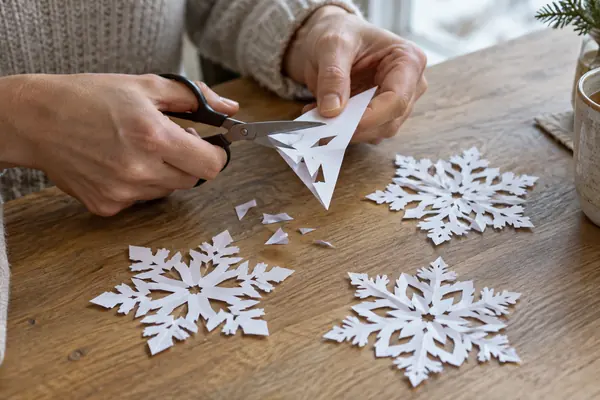
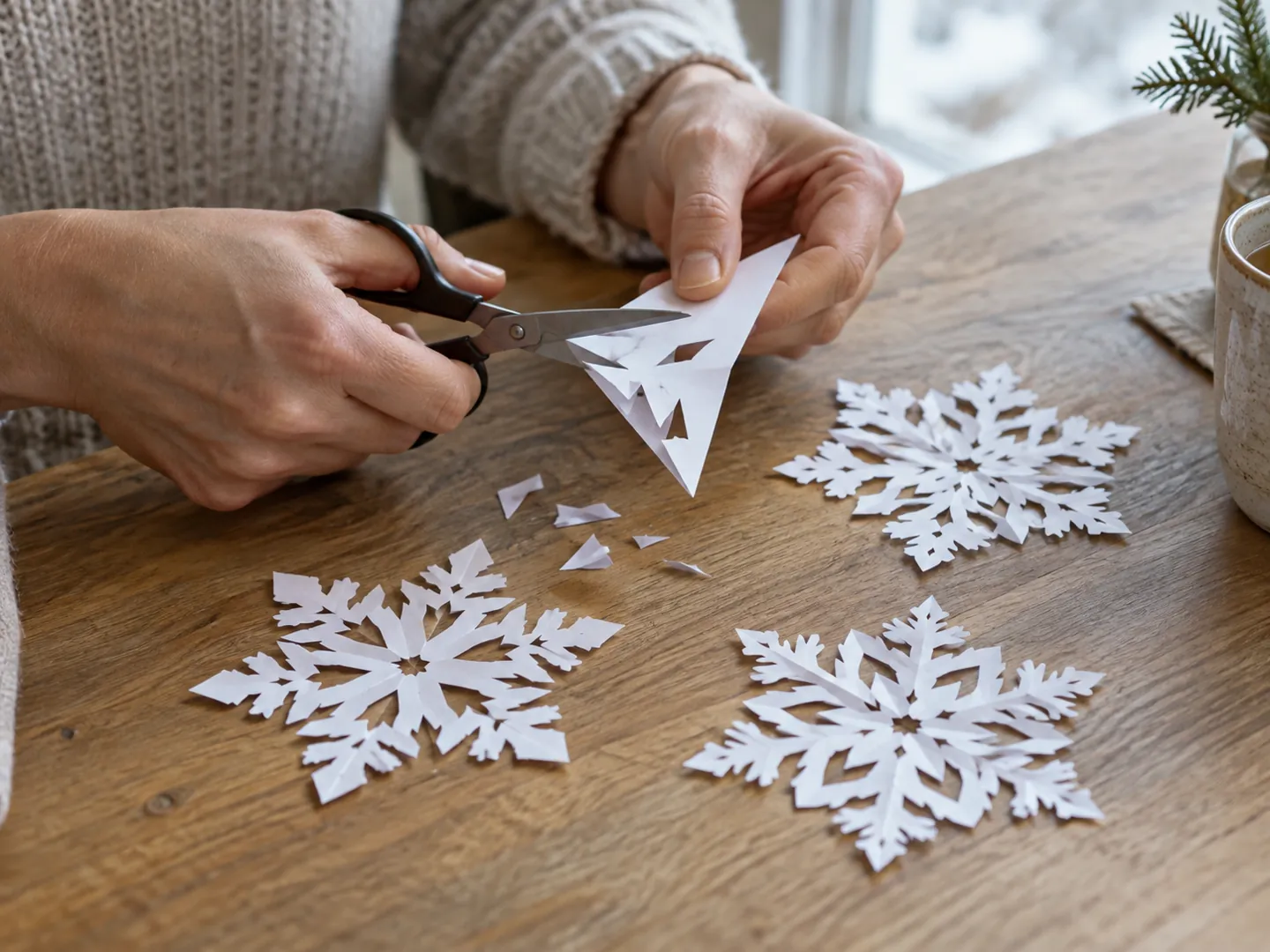
An 1864 snowflake album was made by cutting paper copies of crystals as they landed on a windowsill, a craft now practised by millions of schoolchildren.
See the numbersA QUICK CLOUD CHECK
Pick the conditions in the cloud to see which snow crystals tend to form there. The bar shows how likely you are to find the classic large six-armed star.
Based on the snow crystal morphology diagram as explained by SnowCrystals.com. These are temperatures in the cloud; it is often much warmer on the ground.
TWO NUMBERS WORTH KNOWING
One figure on how big a single crystal gets,
one on how often snow settles in the UK.
10 mm
Largest snow crystal ever photographed
It measured 10 mm (0.4 inches) from tip to tip. The smallest crystals, called diamond dust, can be as small as the diameter of a human hair.
SIZE · SNOWCRYSTALS.COM
13 days
Days of lying snow a year, UK average
The UK averages 13.0 days of lying snow a year (1991 to 2020). Scotland sees the most, with 23.0 days on average.
UK SNOW · MET OFFICE
Perfectly symmetrical crystals are the exception. SnowCrystals.com notes that irregular crystals are by far the most common type; near-perfect ones are sought after by photographers but not common.
FOUR WAYS TO SEE IT
You do not need a lab. These tips follow from what the snow crystal research and the Met Office say about how snow forms and falls.
Near 0 °C flakes melt at the edges and clump into big wet flakes. Cold, dry air gives small, powdery flakes that do not stick together.
Large plate-like crystals are most likely when it is cold, near −15 °C. Plates near −2 °C are smaller and melt easily.
The simplest crystals are six-sided prisms: thin flat plates, slender columns or anything in between.
Most crystals are irregular. Finding a near-perfect star is a lucky catch, not the norm.
FROM VAPOUR TO STAR
A snow crystal forms when water vapour turns straight into ice without becoming liquid first. Faceting builds flat, orderly faces, while branching sends arms and side-branches out into the air.
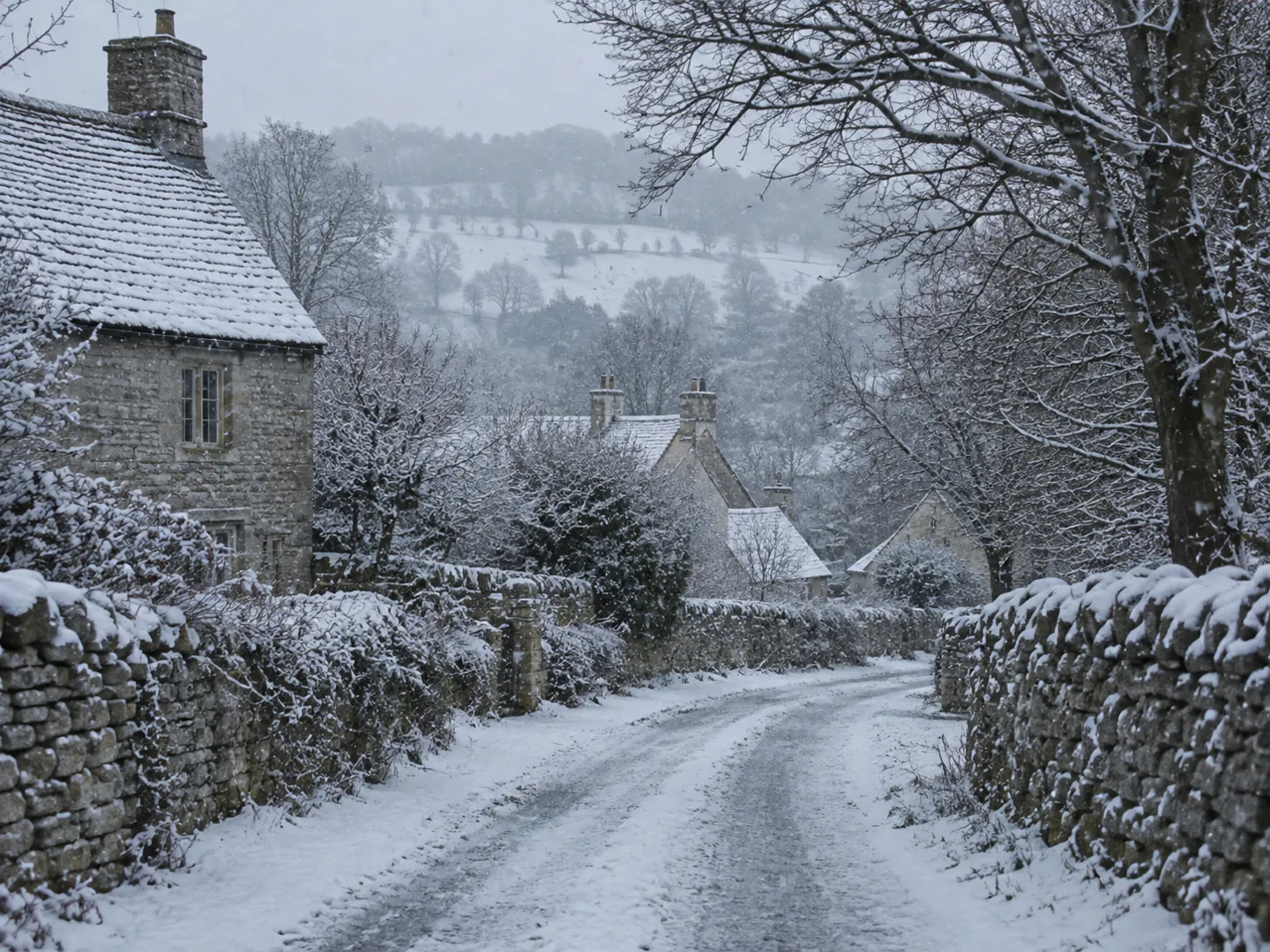
The Met Office explains that snowflakes, as most people know them, are often many crystals stuck together, and that the heaviest UK snowfalls tend to come when the air is between 0 and 2 °C.
Questions
Because of the way water molecules arrange themselves in ice. In a snow crystal they sit in a precise hexagonal array, so the crystal starts as a six-sided prism and its arms grow from the six corners.
Each crystal's final shape depends on its exact path through the clouds, and no two follow exactly the same path, so no two look exactly alike. In a lab, crystals grown side by side under the same conditions have come out nearly, but not precisely, identical.
They do not. Each arm grows independently, but all six meet the same changes in temperature and humidity at the same time, so they change in step.
A snow crystal is a single crystal of ice. A snowflake can mean one crystal or a clump of hundreds or thousands of crystals that collided and stuck together as they fell.
No. The Met Office says precipitation falls as snow when the air is below 2 °C, and that the heaviest UK snowfalls tend to happen between 0 and 2 °C.
ABOUT THIS NAME
kaleidoscopedoodle.com is part of the DoodleSale portfolio. It isn't in an auction right now, but you can ask about leasing it.